
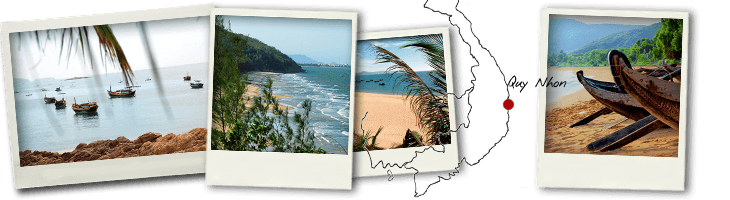
Quy Nhon is a lovely city located in Binh Dinh Province, in Central Vietnam. The place remains quite unknown by tourists therefore the atmosphere there is very genuine. Besides, its long white sandy beaches turns that fishing port into an attractive seaside destination.
Quy Nhon
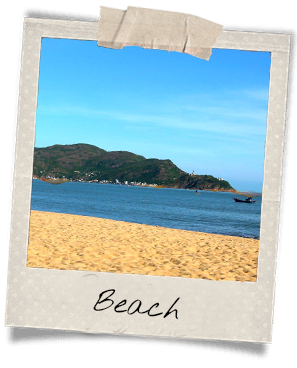
Quy Nhon is known to comprise many beaches, which one of them presenting varied features. Indeed, some may be great venue for sunbathing, while others seem ideal to take a walk. Some others comprise great water for bathing. At Quy Hoa beach, you will have the chance to visit a leper hospital, whereas Quy Nhon’s main beach features typical circular fishing boats.
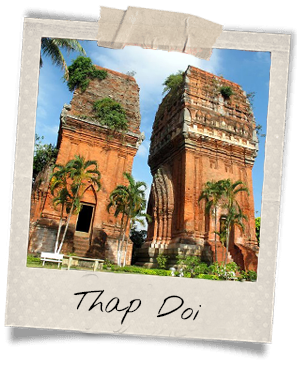
Numerous remnants from the Cham kingdom can be seen in Quy Nhon. There used to stand its last capital, the Cha Ban citadel. You might want to take a look at the Thap Doi Towers which stand out from traditional Cham architecture. Indeed, their roofs are pyramidal-shaped and there are two towers, whereas Cham towers are usually odd-numbered.
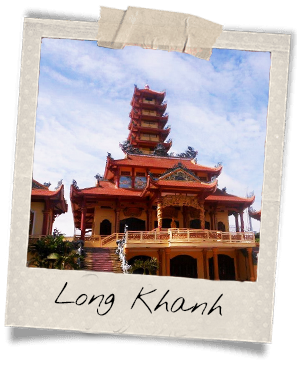
The city’s main pagoda, Long Khanh, features a massive 17-meter tall Buddha which stands in the middle of its courtyard. The pagoda was built in 1715 by a Chinese trader but it was damaged during the war. Nevertheless, the pagoda was restored in 1957.
At the Beach
240 kilometers away from Nha Trang lies Quy Nhon, a seaside destination with various relief comprising primary forests, mountains, and sea. Some landscapes actually resemble the French Riviera. The origins of the city are to be found in the Cham civilization in the 11th century. Portuguese settlers landed in Quy Nhon around 1620 and named the place Pulo Cambi. Later, the last king of the Nguyen Dynasty was born there, in the 18th century. More recently, military forces settled down in the city during the Indochina war. Nevertheless, only one single American tank remains today to illustrate this part of the city’s history.
Many Beaches
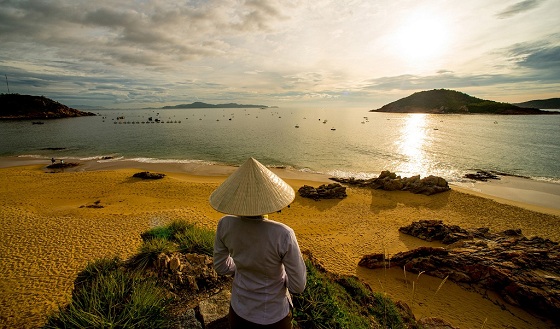
Quy Nhon’s main attraction is its coast featuring beautiful beaches. The mos famous may be Hoang Hau Beach, also referred to as the Queen’s beach, because it used to be Queen Nam Phuong’s, former King Nguyen Hue’s wife, favorite place. The fees to enjoy the beach are 5,000 VND (about 30 cents dollars).
Stone Egg Beach (Da Trung) is not really a venue where you may want to bath. Nevertheless, it features a lovely landscape thanks to its beach that is scattered with round and bluish stones. Its name actually comes from this phenomenon.
Quy Hoa Beach is one of the most beautiful beaches in Quy Nhon, and it is the perfect venue for sunbathing. Not far from there lies a leper hospital which looks like a small village and that may be visited. Patients live in small houses, and take part in varied activities such as fishing and rice cultivation. The aid organization Handicap International set up a workshop where orthopedic prosthesis are made. In the yard, the leper hospital displays busts of famous Vietnamese doctors. Near the beach, one a hill, the poet Han Mac Thu’s stonegrave can be found. He died of leper in 1940.
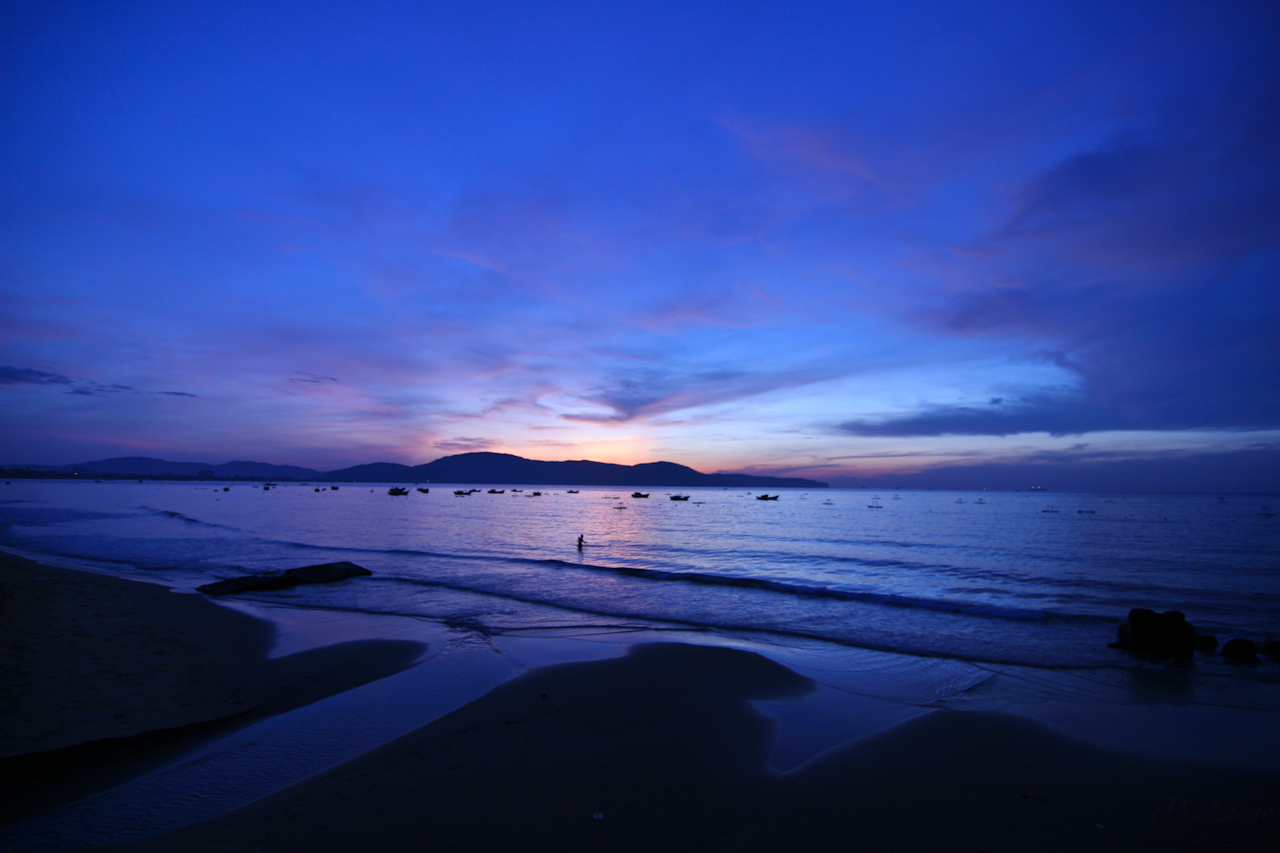 Quy Nhon Beach, which is the main beach, features typical circular fishing boats on its shore, along with trading boats.
Bai Dai Beach (“Long Beach”) is larger and stretches for over 13 hectares. It is the best place in Quy Nhon to enjoy bathing. Plus, it offers a nice vista of Co Lao Xan Island.
Bai Bau Beach, smaller than the others, forms a nice crescent-moon tongue of sand.
Cham Remnants
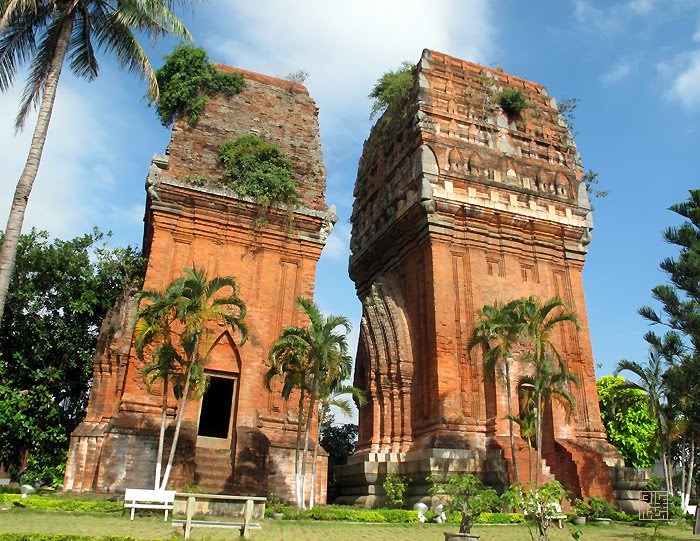
Between the 2nd and the 15th century, the Cham civilization grew, especially in Binh Dinh Province. Numerous remnants from this period of time can be found in the area, including the Thap Doi Towers. Those 20-meter towers stand out from traditional Cham architecture because of their curved pyramidal roofs, and also because of their number. Indeed, traditional Cham towers go together odd-numbered but the Thap Doi Towers are two. The larger tower retains remnants of granite statuary, along with torsos of garuda (half-human, half-bird) on the roofs.
The Cha Ban Citadel seems to have been established in the 10th century. It was the last capital of the Champa kingdom. There are several remnants comprising defense walls, sculptural works, wells and towers. Namely, Canh Tien Tower is decorated with snakes, elephants and other chimerical creatures carved in stone. Two pagodas stand near the citadel. First, up North, there is Thap Thap Di Da which comprises two pillars at its entrance. Down South lies Nhan Thap Pagoda. Besides, the Banh It Towers are also Cham remnants. They are commonly referred to as Silver Towers, and they stand above the Vietnamese countryside, on the top of a hill.
Museums and Walking Around
Long Khanh Pagoda is the main pagoda in the city. It was built in 1715 by a Chinese trader and was restored in 1957 after being damaged by the war. A huge 17-meter-high Buddha stands in the courtyard, and was erected in 1972. Long Khanh also features mosaic dragons with manes of broken glass. There is another Buddha inside the pagoda which is made of brass and crowned with a multicolored neon halo. On the wall was drawn a picture of Chuan De, the Goddess of Mercy.
Further from Quy Nhon, i.e. 50 kilometers away, lies Ham Ho Nature Reserve where you may want to cruise the river through the jungle. The reserve comprises wonderful natural basins in which you may have the chance to swim.
Quang Trung Museum was established in memory of the revered national leader Nguyen Hue, the last king of Nguyen Dynasty who led the anti-feudal Tay Son rebellion. He became emperor in 1788 under the name of Quang Trung. Soon he managed to defeat the 200-hundred-man Chinese army. From that moment on, he set up a range of reforms in terms of military defense, education, agriculture and arts. Besides, Binh Dinh Museum is a small place relating the surroundings’ history, from Cham civilization to Indochina War, to communism.
Climate
Quy Nhon’s weather is divided in two seasons. The dry season takes place from January to July, and the rainy season from August to December. Temperatures are cooler in January and February, but summer arrives from March to August. Average temperature is pleasant throughout the whole year, varying from 25 to 35 Celsius degrees.
Local Cuisine
Because of its seaside location, Quy Nhon abounds in cheap and fresh seafood and shells. But these are not the only culinary wealth of the region. Cha ca Quy Nhon is a main specialty. It consists of fried fish patties accompanied by a broth and vermicelli. The dish is even more popular since 2013 when it was designated as one of the 10 Vietnamese specialties by the Asian Records Organization.
Should you want more information, please contact us:

