
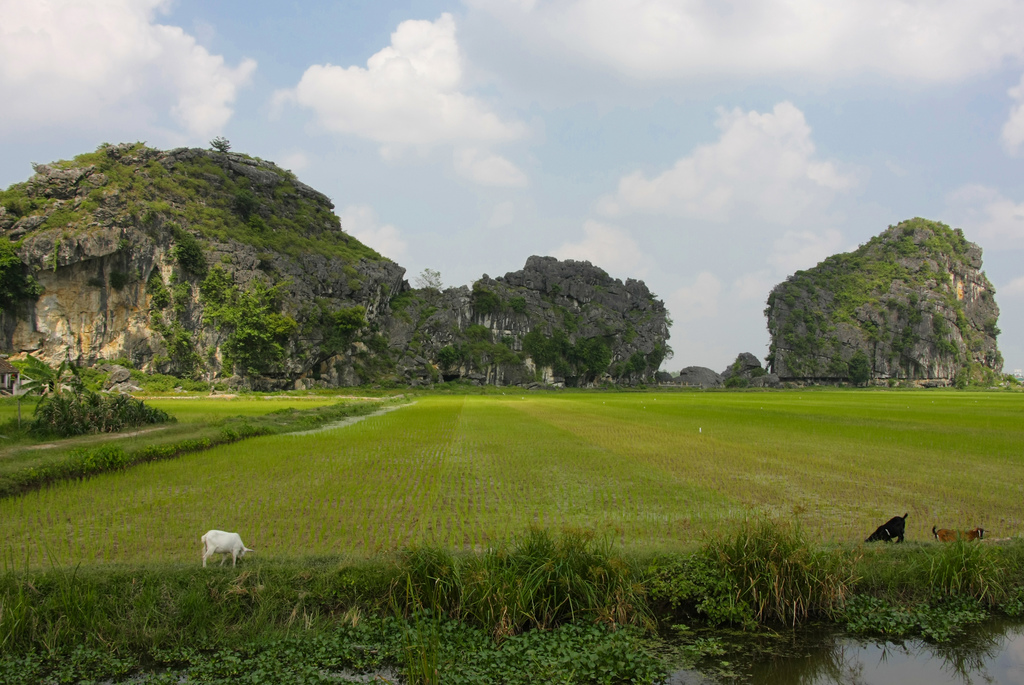
Petit paradis à 95 km de Hanoi, Ninh Binh est une ville et province du delta du fleuve Rouge au paysage à la fois aquatique et terrestre. Ses immenses pains de sucre, les mêmes que ceux de la baie d’Halong, semblent flotter au-dessus des rivières et des cours d’eau, donnant à la région le surnom de baie d’Halong terrestre.
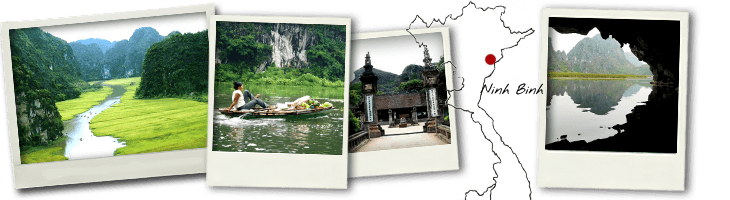
Ninh Binh, la baie d'Halong terrestre

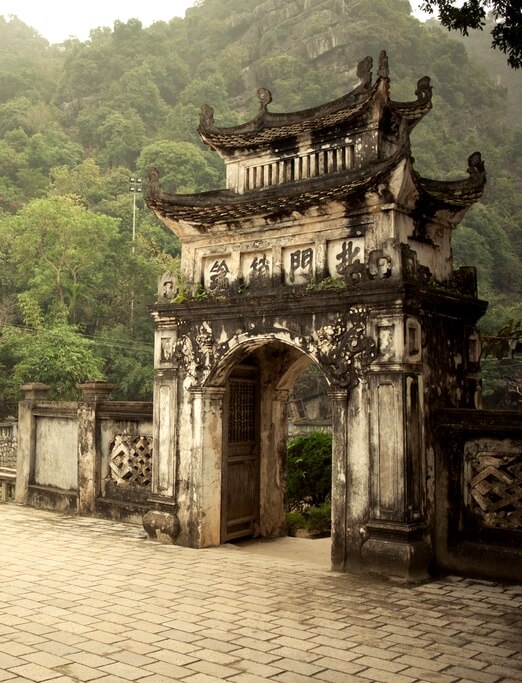
Hoa Lu, construite entre 968 et 1010, a été la capitale vietnamienne à trois reprises et garde encore aujourd’hui des traces de son caractère impérial. Située dans la province de Ninh Binh, elle renferme de nombreux sites touristiques, dont Bai Dinh qui est la plus grande pagode de tout le Vietnam, mais aussi la vallée du Soleil, la pagode de Bich Dong, le temple du roi Le Dai Hanh ou celui du roi Dinh Tien Hoang. La plupart des monuments sont donc reliés au passé royal de la ville.

Dans le paysage verdoyant de Trang An, la rivière s’enfonce par moment dans des grottes obscures et fascinantes. Les trois plus connues sont Ba Giot (Trois grottes), Dia Linh (Terre Sainte) et May (Nuage). La barque qui vous accompagne dans l’antre de ces montagnes calcaires glisse sur l’eau sans un bruit. Pour cause, le capitaine n’a pas de moteur mais des rames silencieuses. Cet endroit paisible diffère de la magnifique baie d’Halong.

Considérée comme la plus grande réserve naturelle du Vietnam, ce parc de plus de 220km2 renferme une faune et une flore impressionnantes par leur diversité. Pourvu d’oiseaux, de serpents, de onze sortes de poissons et de près de deux cents espèces de plantes aquatiques, cet endroit est un réel trésor pour les passionnés de la planète. De plus, nombreux sont les animaux présents dans ce parc qui sont en voie de disparition. C’est donc l’occasion ou jamais de voir des primates amenés à disparaitre de l’écosystème.
Paysages
Les grottes
Embarquez pour une petite croisière sur la rivière Ngo Dong et serpentez entre les monts et les rizières. Le conducteur de votre barque, très souvent une femme ramant avec les pieds (qui essaiera de vous vendre des nappes brodées, souvenir typique de la région), vous fera découvrir les méandres de la rivière, et passera vers Tam Coc et ses trois grottes : Hang Ca, Hang signifiant « grotte » et Ca le chiffre 1, signifiant « première grotte » ; Hang Hai signifiant « deuxième grotte » ; et Hang Ba, signifiant donc « troisième grotte ».
On trouve d’autres réseaux de grottes au détour de la rivière, comme Trang An (50 grottes dans une forêt primaire), la grotte de Van Trinh, la grotte de Bouddha (ce nom lui vient d’une pierre ayant la forme d’un Bouddha allongé), ou encore la grotte de la Danse, en forme de cloche, où l’on peut faire de l’escalade, et avoir un magnifique panorama sur la baie d’Halong terrestre.
La réserve de Van Long
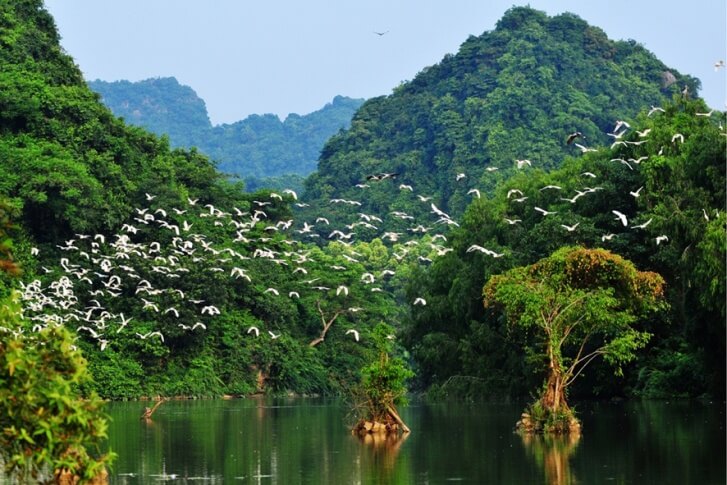
La réserve naturelle de Van Long, où il est commun de voir des singes à culotte blanche (Langur de Delacour) et des cigognes, est la partie la plus immergée de Ninh Binh. Elle offre un magnifique effet miroir grâce au paysage qui se reflète dans l’eau. Vous pouvez y prendre une barque en bambou pour une balade de 2 heures à travers un décor sublime et apaisant, tout en visitant une petite grotte creusée sous une montagne de karst.
Le parc national de Cuc Phong
Créé en 1962 par Hô Chi Minh lui-même, il est le tout premier parc national du Vietnam, et le départ de la légendaire piste Hô Chi Minh pendant la guerre. Il est réputé pour posséder l’une des dernières forêts vierges du Vietnam, sa faune et sa flore abondantes étant restées à l’état sauvage. Parmi les espèces présentes, on trouve : ours, tortues, léopards, singes, écureuils… ce qui en fait une réserve naturelle et biologique importante. Le parc est engagé dans plusieurs programmes de conservation dont le Centre d’Aide aux Primates et celui pour la protection des tortues.
Temples et pagodes
Hoa Lu, à 5 km de Ninh Binh, est connue pour avoir été la capitale du Vietnam sous les dynasties Dinh (968-980) et Le (980-1009) dix siècles plus tôt. Elle est située au centre d’une magnifique vallée encerclée par des montagnes, et rassemble deux sanctuaires dynastiques, dédiés aux rois Dinh et Le.
À quelques kilomètres de Tam Coc se trouve la pagode de Bich Dong, située sur le flanc de la montagne du même nom. Aussi appelée Nam Thien de Nhi Dong signifiant « deuxième plus belle grotte du Vietnam », ou grotte de Jade, elle fut découverte par deux bonzes, Tri Kien et Tri The, qui voyageaient dans le but de répandre le bouddhisme à travers le pays. Arrivés à la grotte, ils décidèrent d’y construire trois pagodes, sur trois étages (la pagode basse, intermédiaire, et haute). Elle fut plus tard surnommée « pagode de la Jade » par le seigneur Trinh Sam, en lien avec le nom de la grotte et pour rendre hommage à la beauté du lieu. Ce magnifique sanctuaire apparait dans le film Indochine de Régis Wargnier comme le refuge de Camille et Jean-Baptiste, pourchassés par les Français.
Plus loin, la cathédrale de Phat Diem (signifiant « qui engendre la beauté ») est un lieu de rendez-vous pour les catholiques, dont l’architecture allie à merveille le style des pagodes et celui des églises. Elle est située au bord d’un étang, et comprend un campanile, quatre petites chapelles, une église, deux grottes ainsi qu’une statue blanche du Christ sur un ilot, au milieu du lac. Cette cathédrale est classée comme monument culturel et historique par le ministère de la Culture.
La pagode Bai Dinh est connue pour être un complexe de temples vieux de mille ans, dans la commune de Gia Sinh. Il détient à ce jour 12 records nationaux dont la plus grande cloche en cuivre pesant 30 tonnes, et le couloir de statues d’Arhats le plus long, soit 3 km pour 500 statues pesant chacune 4 tonnes. Le temple le plus grand du complexe abrite trois statues dorées de Bouddha, représentant le passé, le présent, et le futur. Cette pagode fut créée pour le culte du Ciel et de la Terre, de Bouddha et des Anges célestes. D’ailleurs le roi le Dinh Tiên Hoàng y organisa des cérémonies de sacrifice au ciel et à la terre.
Sur le chemin de cette pagode, les touristes peuvent visiter les grottes Sang (Lumière), et Toi (Sombre), le premier ayant été édifié pour Bouddha et le deuxième pour la déesse mère Mau.
Spécialités culinaires
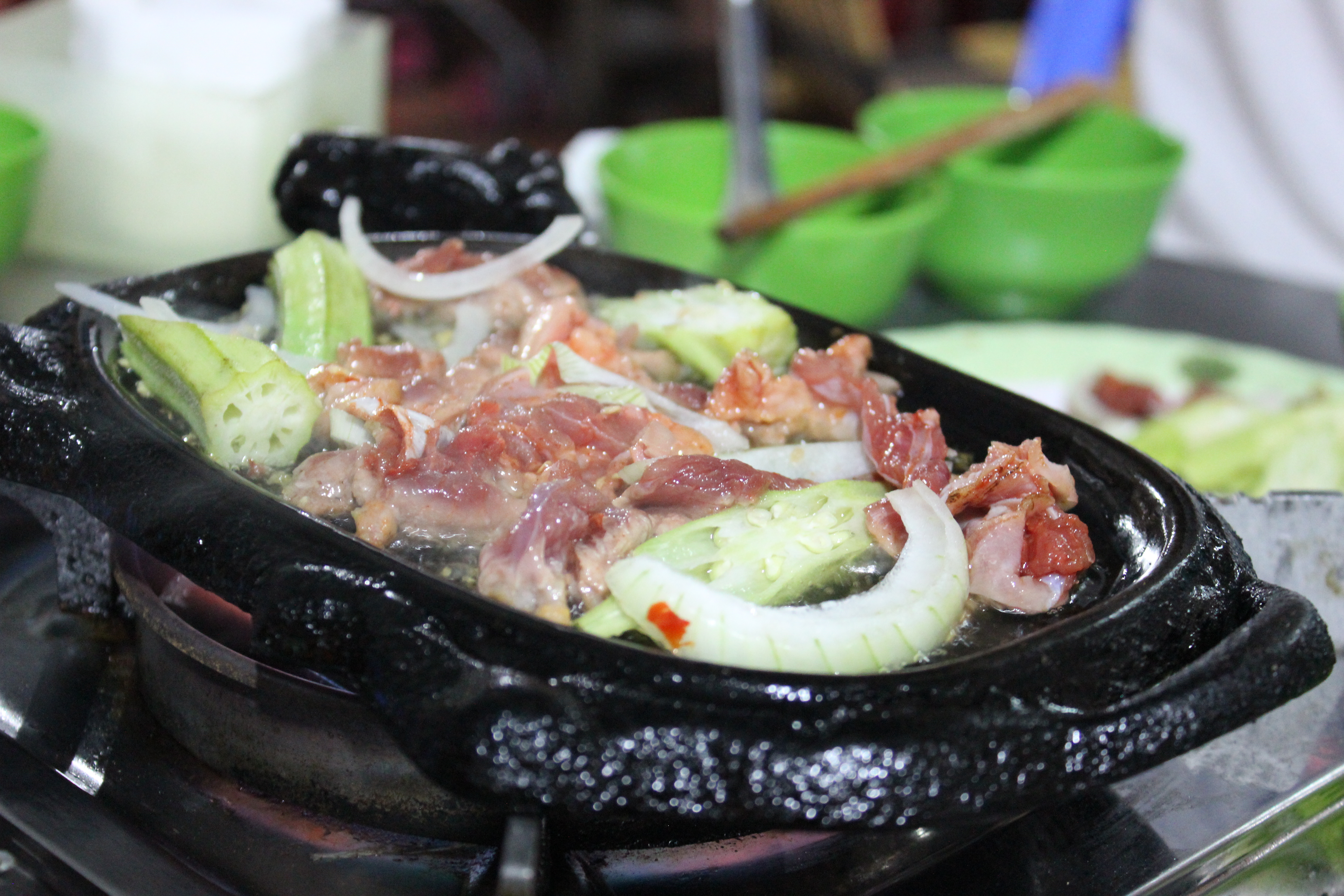
L’une des spécialités de Ninh Binh est la viande de chèvre, car les chèvres ont meilleur goût, ayant une meilleure alimentation dans les montagnes calcaires où elles sont élevées. La viande de chèvre est donc cuisinée pour en faire des nems, grillée, ou en fondue de chèvres. Cette viande s’accompagne particulièrement bien avec la sauce soja et quelques morceaux de bananes vertes.
Une autre spécialité de Ninh Binh est le com chay, ou riz grillé à la casserole et séché au soleil, puis doré à l’huile, donnant un goût croquant à ce mets qui est officiellement reconnu comme une des 10 spécialités les plus connues du Vietnam par l’Organisation des records d’Asie. Puis on ajoute de la viande de bœuf et du cœur de porc, mélangé avec des tomates, des carottes, des oignons et des champignons, sautés à la poêle puis versé dans le riz grillé.
Ninh Binh est aussi reconnu pour son alcool de riz Kim Son, très savoureux car le riz utilisé est particulièrement parfumé et de bonne qualité. Kim Son est le nom du district où est cultivé le riz, et signifie au sens figuré « montagne d’Or ».
Pour tout projet ou information complémentaire, merci de nous contacter !

