It may seem inconceivable to visit Vietnam without going to the famous Mekong Delta. The Mekong River originates in the Tibetan Plateau and runs over 4.800 kilometers through Thailand, Laos, Cambodia, China, Burma and Vietnam. It empties into the sea through the Mekong Delta whose name in Vietnamese means “Nine Dragon river delta.” The region encompasses lush foliage, a network of rivers, canals and streams, floating villages, and may be among the most attractive places in Vietnam.
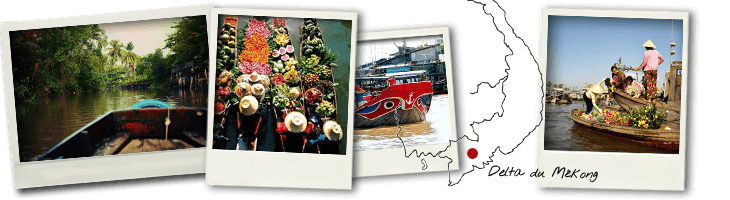
The Mekong Delta
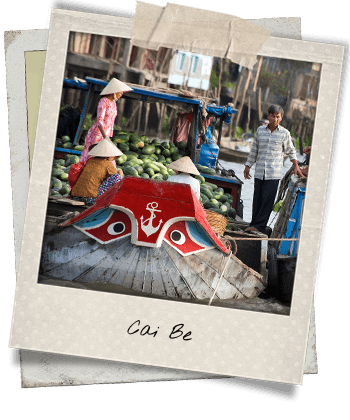
As a typical and genuine little city in the Mekong Delta, life in Cai Be runs mostly through its floating market. Hectic sales happen very early in the morning. You may want to taste coconut candies, a traditional product from Mekong, or have a glimpse at colonial houses which combine charming architecture and lush foliage. Then take a rest on a private sampan cruise along the Nine Dragon River.

My Tho is best known for its lush and green foliage, and its islands. It is also the main harbor in the Mekong Delta region. Cargos cruising to Cambodia usually take a rest in My Tho. Vinh Trang Pagoda stands as the religious symbol of the city, and it is famous to be the biggest pagoda in Southern Vietnam. It comprises a big garden which combines Chinese, Khmer, and French styles.
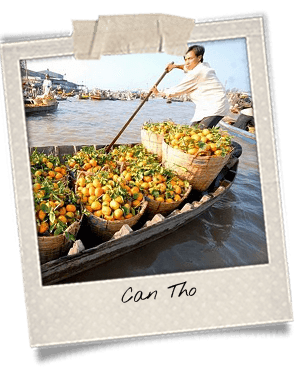
Economic, politic, and cultural center, Can Tho is the biggest city in the Mekong Delta. It encompasses typical features of the region, from floating market to conical hats, traditional market on Linh Kieu Port, and handmade treats made of coconut. It is also noted for the Indochinese house known as Binh Tuy, in which a scene from L’Amant was shot. Also, Can Tho is a great venue to enjoy a tailor-made cruise on the Mekong River.
The “Rice Bowl” of Vietnam
The Mekong Delta region encompasses a third of the whole country’s food production, and one of the biggest rice harvests in the world. Its nourishing water makes possible the cultivation of any kind of food from sugar cane to vegetables and tropical fruits such as coconut, rambutan, dragon fruit, lychee, jackfruit, bananas and many more.
What To Do in the Mekong Delta
Fruits orchards are everywhere in the region. You may be staying at a guest house that offers cycling tours in the surrounding orchards. Besides, you may also get the chance to listen to traditional songs and take part in the preparation of dinner, enjoying a more genuine experience.
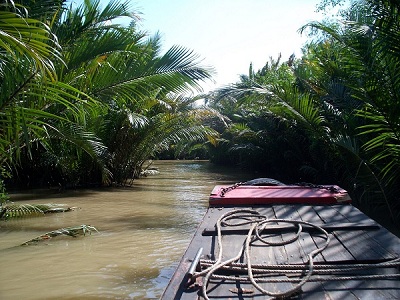
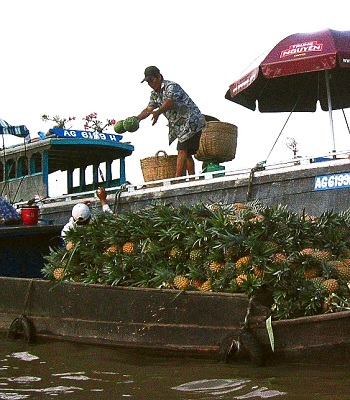
The Mekong Delta area comprises wide rivers but also small streams that are not easily accessible by boat. Should you want to venture through hidden parts of the region, a cruise on a pirogue is definitely the best option. Floating markets take place everywhere, their sizes depending on the importance of the city, but each of them presenting a wide range of vegetables, fruits and spices. Markets start early in the morning, so set your alarm on and get ready to be up at dawn to enjoy the most animated times of the places.
Cities in the Mekong Delta
The Mekong Delta region stretches on 39,000 square kilometers; it is wide and its landscapes and cityscapes are varied. Each town has its own charming features.
Among the main cities in the area stands Sa Dec, best-known for having been the French writer Marguerite Duras’ hometown in the 1920s. Visitors may also have a look at his Chinese lover’s house, also called “the Blue House,” and stay overnight. The city itself contains big flower gardens where a lot of Vietnamese from Saigon come to go shopping before the Tet festival.
Can Tho is the largest city in the Mekong Delta region, as well as an economic and cultural centre. Its floating marked, Cai Rang, is very famous. The city also houses a crocodile farm and a stork garden called Bang Lang. Ninh Kieu Port stands as a symbol of Can Tho.
Located near the Cambodian border, Chau Doc comprises the Tra Su bird sanctuary and flooded forests. Other cities such as Cai Be, My Tho – a former Cambodian name that means “beautiful lady” –, and Vinh Long are worth the discovery.
Cruises
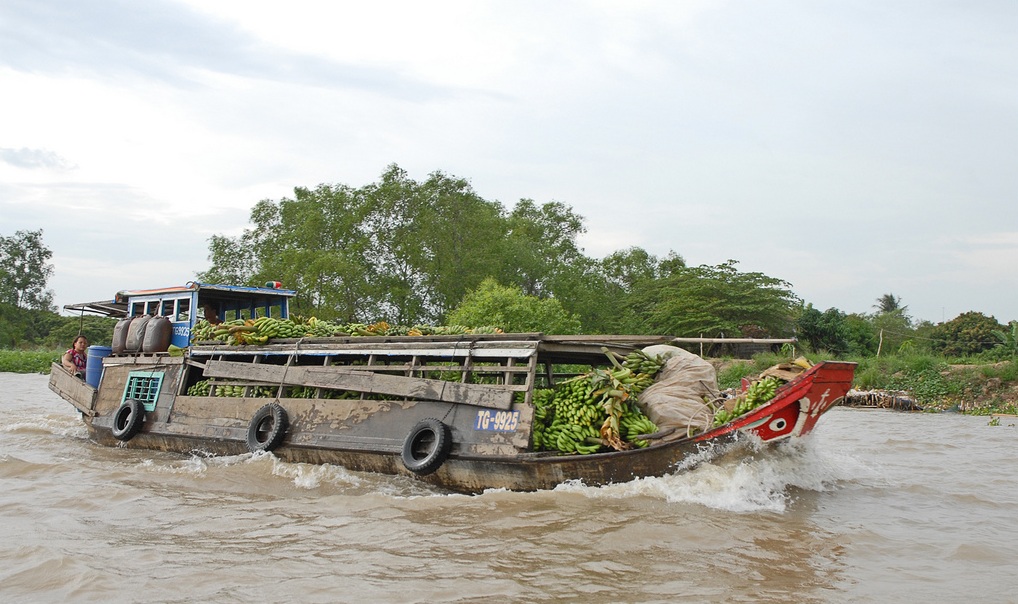
Once you get to the Mekong Delta region, you may embark on a cruise. Look closely and you will notice that each boat bears a painted pair of eyes on its stern. Indeed, a new boat has to pass through a series of ceremonies. One of them is called the “eyes opening” and consists in painting this symbol in order to give luck and protection against accidents. Besides, several companies offer cruises in the Mekong Delta area. Some of them have sumptuous sampans whereas others’ fleet reminds French colonial architecture. Eventually, you may want to have a shorter cruise and book an open boat called Bassac.
Should you want more information, please contact us:

